Boards
Composite Decking in Wallsend, Set Against Timber
Composite decking installers and timber specialists will each make their case. Here is the plain comparison for a Wallsend home, based on how much shade, damp and upkeep your garden brings.
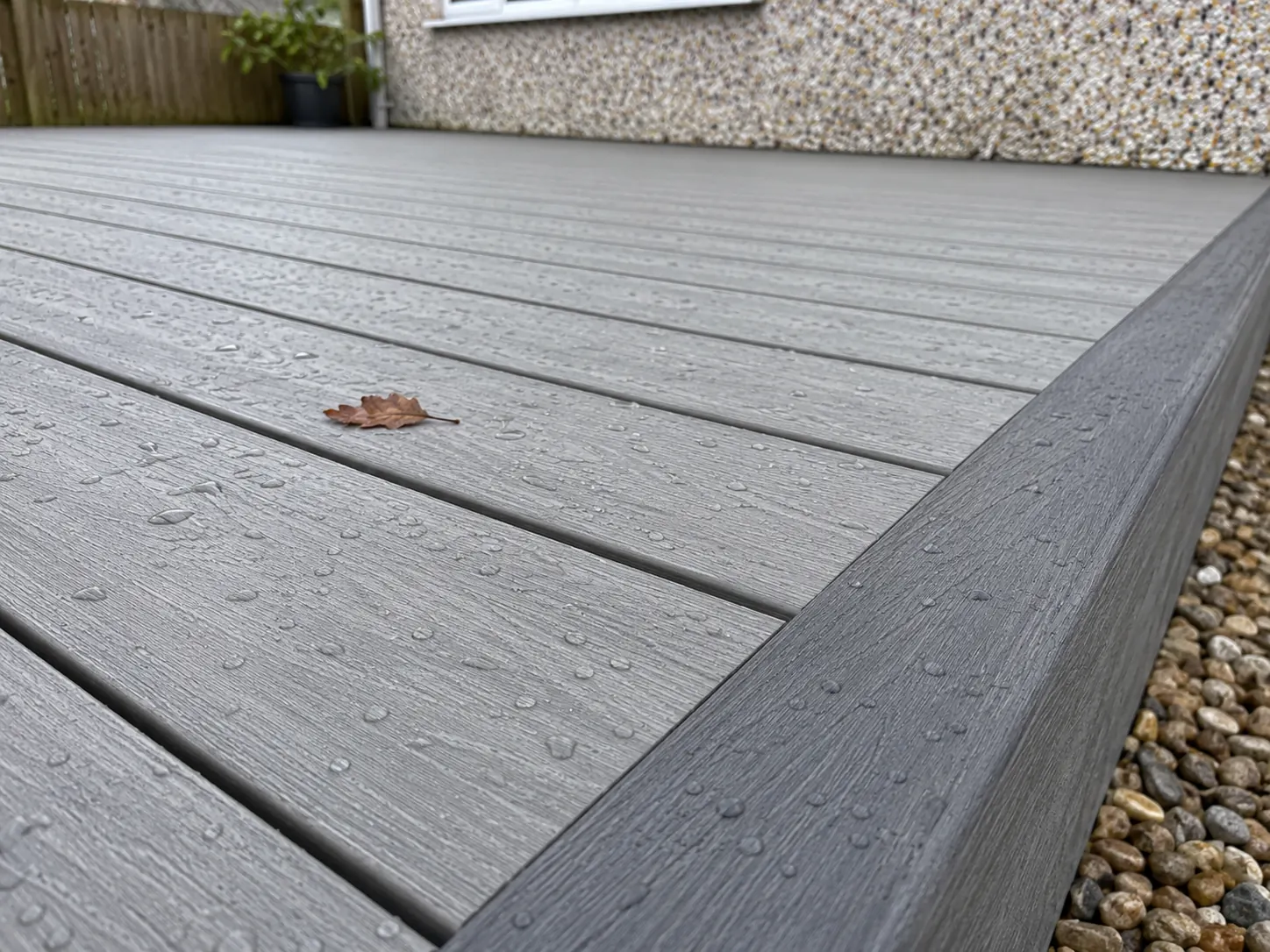
What the weather actually does
The North East has a reputation for rain, but the numbers are more modest. Tynemouth, a few miles down the Tyne, averages about 608mm of rain a year across about 116 days with a millimetre or more. November is the dampest month, with about 12 such days. Winter maximums in the low single figures mean wet boards dry slowly.
So drenching is not the main enemy. Lingering damp is. A south-facing deck on an open plot dries quickly after rain, while a north-facing plot between two walls may stay wet for days. That matters more to your choice of board than any regional average.
Source: Met Office: Tynemouth long-term averages, 1991 to 2020. Tynemouth is the nearest long-term station on that page, not Wallsend itself. Viewed 5 November 2026.
Composite and timber side by side
| Softwood | Hardwood | Composite | |
|---|---|---|---|
| Relative cost | Lowest | Highest or close to it | Higher than softwood |
| Regular upkeep | Cleaning, plus oil or stain to keep the colour | Cleaning, plus oil to hold the tone | Washing down; no staining |
| In shade | Greens up without care | Greens up more slowly | Can still grow algae on surface dirt |
| Look with age | Fades to silver-grey | Fades to a softer grey | Colour holds well, may lighten a little |
| Repairs | Replace one board easily | Replace one board, matching is harder | Replacement depends on the range still being made |
| Weight to carry | Light | Heavy | Heavy |
Treat those as general patterns. Ranges vary a good deal, so read the maker’s own figures for anything you are seriously considering.
Where composite earns its keep
In a shaded garden, composite has a strong case. It will not rot or splinter, it needs no staining, and it keeps its colour without weekend work. Look for boards with a capped outer layer, which resists marks better than older uncapped boards. People with little time, or who simply want the job finished for years, usually lean this way.
It is not maintenance-free, whatever the brochure implies. Leaves and dirt still settle, and algae can grow on that film. A soft brush and soapy water deals with most of it. Dark boards also warm up noticeably in direct summer sun, which may matter for bare feet on a south-facing plot.
Where timber still wins
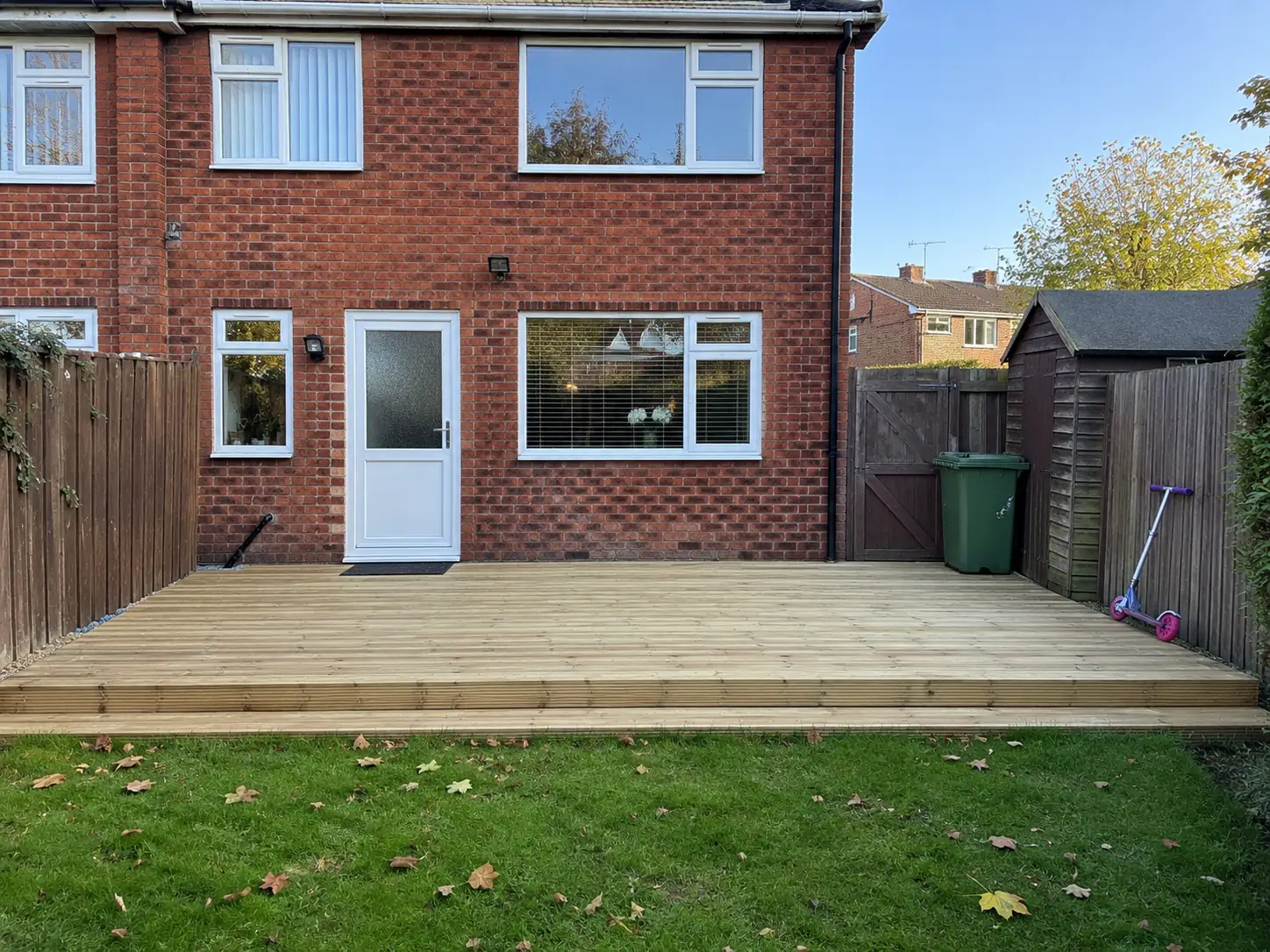
Softwood costs less to buy, and it is simpler to cut, repair and alter. If you plan to move on in a few years, or the deck is a large one on an open, sunny plot, timber can be the sensible choice. It also looks natural against old brick and suits a family garden where scuffs do not matter much.
The price of that is routine care. Keep boards clean, treat cut ends properly and re-coat when the finish wears thin. Left alone in a damp corner, softwood goes green and then slippery, as plenty of ageing decks around town will show.
Grip on wet days
Nobody should promise a board will never be slippery. Algae and wet leaves make any surface risky, grooved or smooth. Regular cleaning helps grip far more than any board profile. Some makers publish slip test results, so ask to see those if you have older people or small children using the deck daily.
Grooves, by the way, run the way the rain does not always want to go. Water can sit in them on a flat deck, so building in a gentle fall towards the garden helps. Mention who will use the deck most when you ask for prices, and it can shape the advice.
Either way, the frame comes first
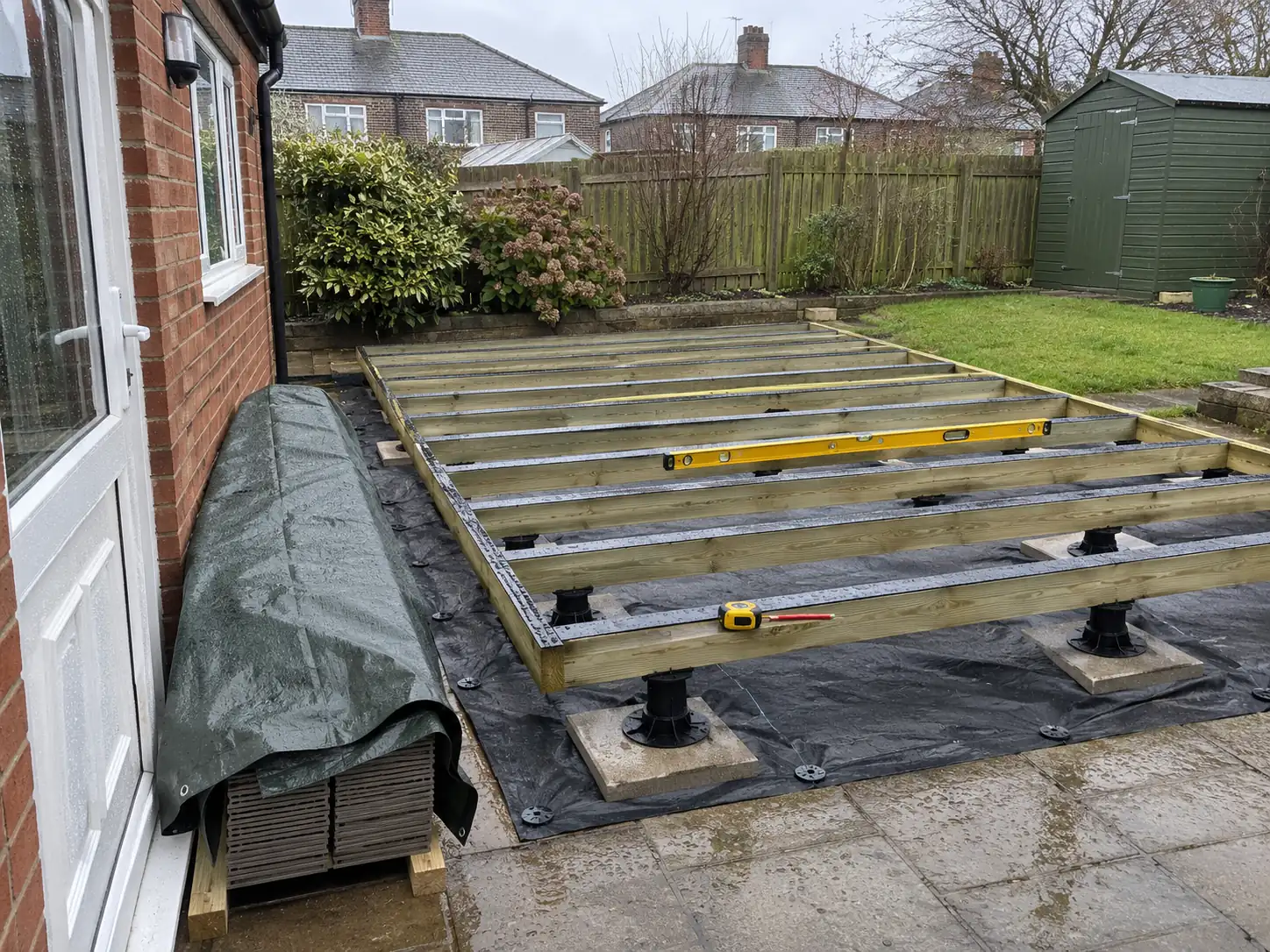
Composite boards do not hold up a poor frame. Most need joists closer together than old timber decks used, and many makers set rules on gaps, fixings and ventilation that can affect any warranty. Ask to see those instructions for the exact board being priced.
Can’t decide? Ask for a price on both. The quote form has an option for exactly that.
Weighing up boards?
Choose “A price for each” on the form and compare them for your own garden.